In Search of Codex Amrensis 22: The Investigation Behind a Monograph
The publication of my new monograph, Codex Amrensis 22: History and Analysis of an Early Qurʾānic Manuscript (Brill), marks the culmination of a research journey that began more than a decade ago.
When I first started working on this manuscript, during my Master and then my PhD, I had access to only about fifty folios preserved in the collection of the Bibliothèque nationale de France. Yet it was known that these leaves once belonged to a much larger codex: the monumental Qurʾān discovered in the Mosque of ʿAmr in Fusṭāṭ (Old Cairo) whose folios were scattered across several institutions.
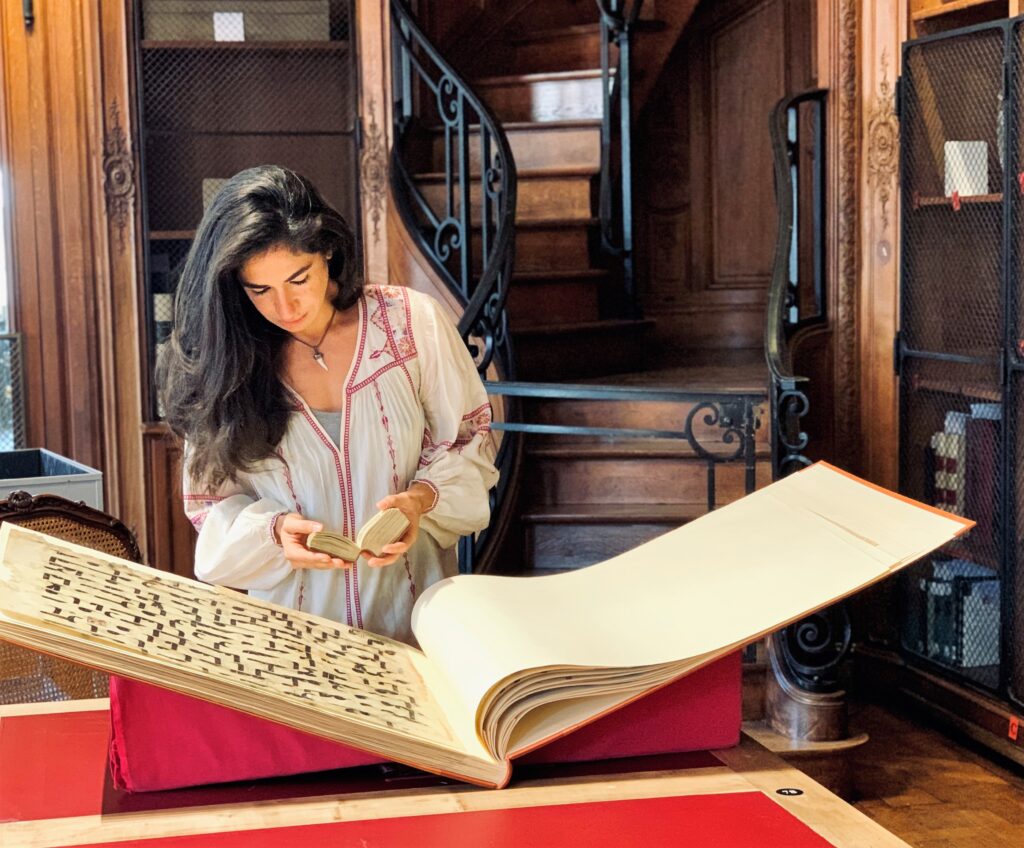
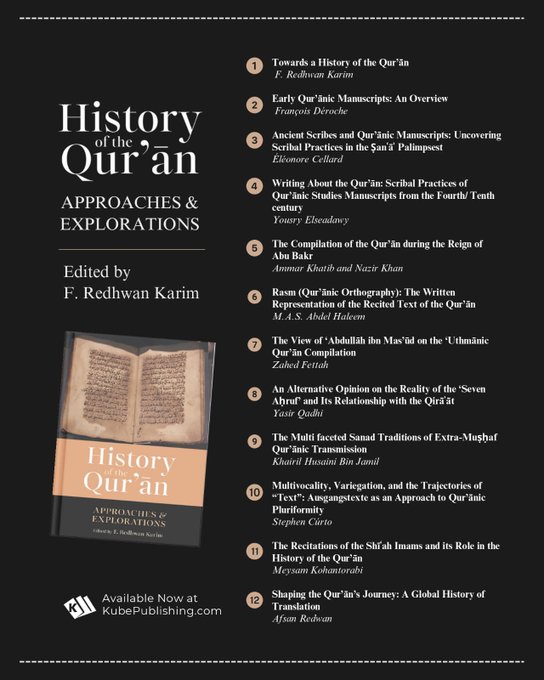
Folios of the Codex Amrensis 22 at the Bibliothèque nationale de France, Arabe 324
In 2020, I received a funding by the Ministry of Interior of France (Bureau des Cultes) so I can finally go and investigate the dispersed leaves preserved elsewhere. Despite the challenges posed by the global pandemic, I was able to undertake a research journey across the collections that still preserve portions of this extraordinary manuscript.
In total, I examined more than 900 folios dispersed among collections in Paris, Gotha, Cairo, Istanbul, and Detroit. Bringing together this vast body of material made it possible, for the first time, to reconstruct much of the codex’s history, from its production to its modern dispersal.
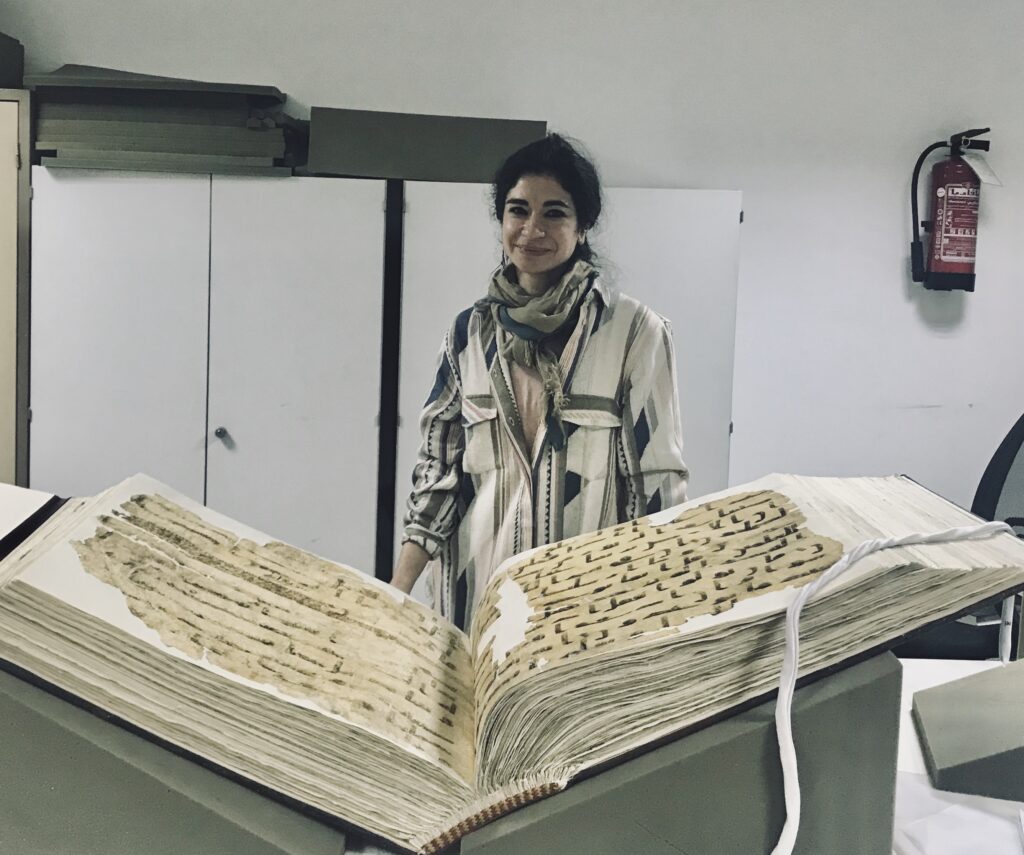
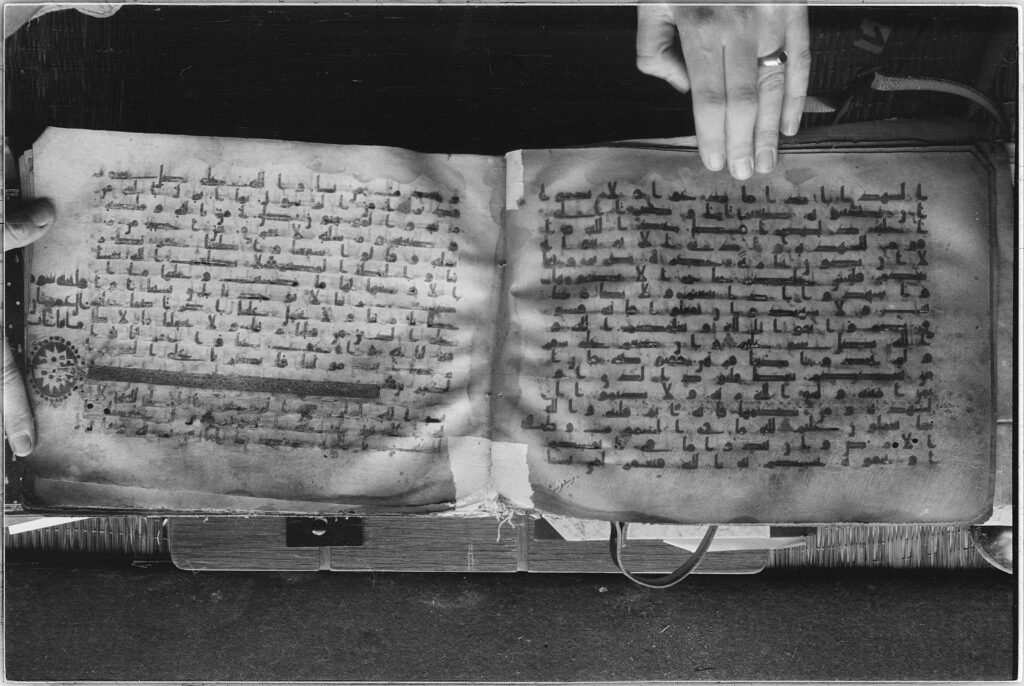
One of the most significant milestones was gaining access to the holdings of the legendary Dār al-Kutub in Cairo. After years of studying the European fragments, I was finally able to examine the bulk of the manuscript preserved in Egypt. This opportunity profoundly transformed my understanding of the manuscript and its transmission.
Feb. 2020. Dar al-Kutub al-misriyya, Rasid Masahif 139
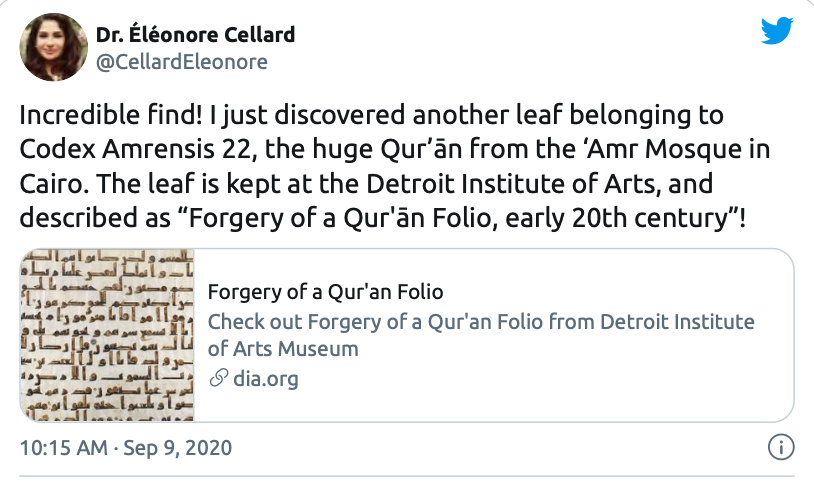
Another unexpected breakthrough came in September 2020. While preparing my next mission to Istanbul, I came across another folio of Codex Amrensis 22 kept in the collection of the Detroit Institute of Arts. Interestingly, this folio that had been catalogued as a “forgery of a Qurʾān folio” dating from the early twentieth century. This new discovery has raised new questions about the manuscript’s journey, but has also led to a very nice collaboration with the team in Detroit, who carried out analyses of the ink and parchment; and who have since revised their description 🙂
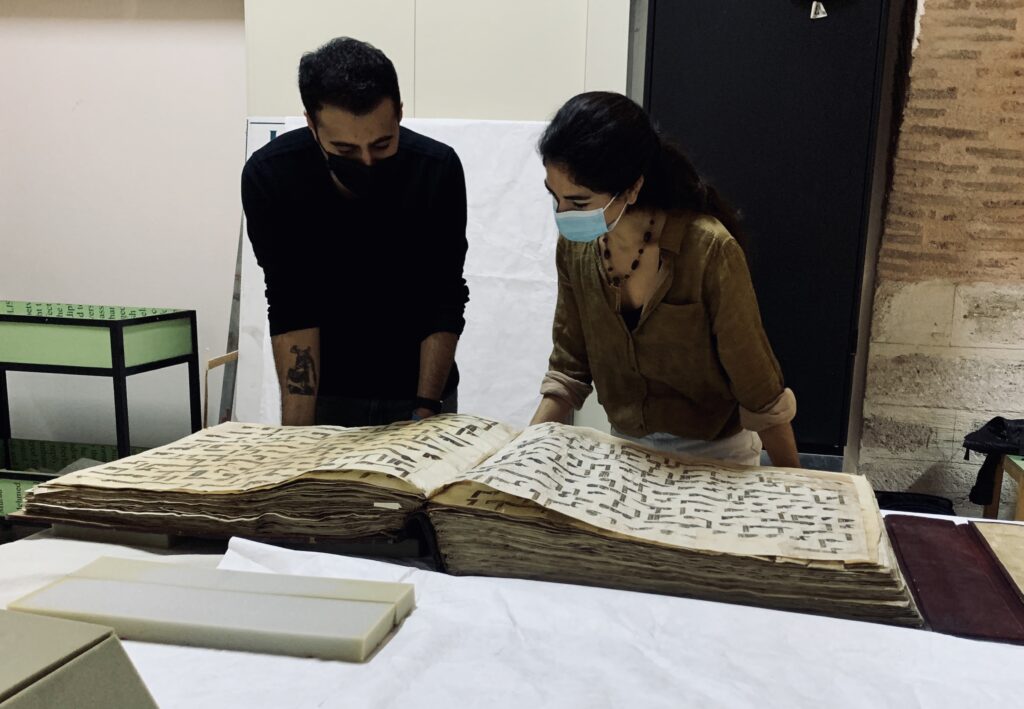
The next stage of the investigation took place in Istanbul, TIEM museum, where other leaves of the codex are preserved. After years of research in Paris, Gotha, Cairo, and elsewhere, it became possible to gain an unprecedented overview of one of the most important early witnesses to the Qurʾānic text.
Oct. 2020. Istanbul, TIEM
The results of this research were sometimes surprising. Codicological and palaeographical analysis demonstrated that Codex Amrensis 22 is not a single manuscript, but rather the result of the merging of two distinct manuscripts at some point in their history. The study of textual variants, manuscript structure, artistic features, and radiocarbon dating has likewise provided new insights into the formation and transmission of this exceptional codex.
This monograph presents the results of that investigation and traces the fascinating history of a manuscript that, more than thirteen centuries after its production, continues to reveal new secrets.
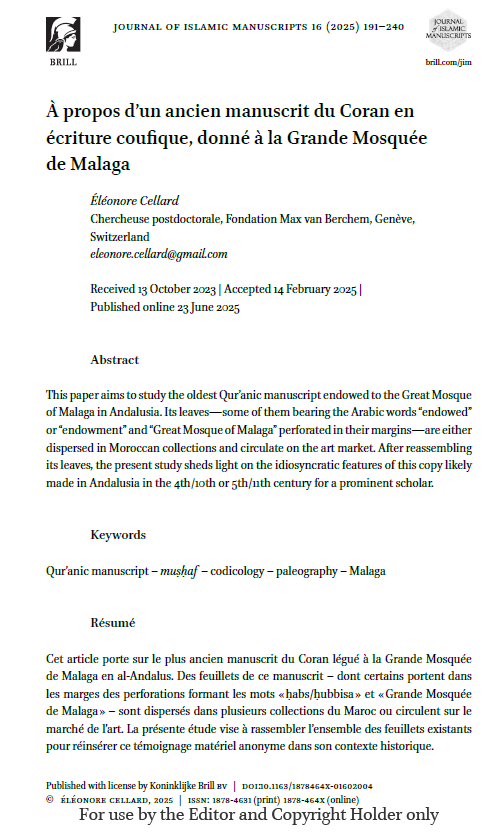
This story is based on the article “À propos d’un ancien manuscrit du Coran en écriture coufique, donné à la Grande Mosquée de Malaga,” published in Journal of Islamic Manuscripts 16 (2025): 191–240.
Sometimes a manuscript survives not as a book, but as a puzzle…
A single leaf appears in a library. Another surfaces at an auction. A third lies unnoticed among fragments in a mosque collection. Separated by centuries and geography, these pieces seem unrelated—until a small detail reveals they once belonged to the same object.
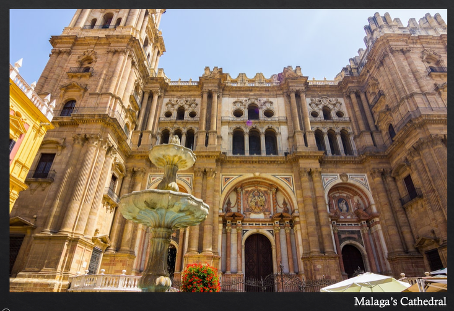
This is the story of a remarkable Qur’anic manuscript once housed in the Great Mosque of Málaga in medieval al-Andalus. Although the Great Mosque no longer exists, having been converted into a church in 1487 CE, its name—Jami‘ Malaqa—remains forever etched, through a method of perforation, on the leaves of this manuscript.
Like the mosque itself, the manuscript has endured the ravages of time and conflict, yet it has managed to survive and reach us. Today, it no longer exists as a complete codex; its leaves are scattered across libraries, private collections, and the art market. But when these fragments are carefully studied and compared, they begin to reveal the outline of a lost book—and the scholarly world that produced it.
A Manuscript in Pieces
So far, sixty-two leaves belonging to this manuscript have been identified:
Some are preserved in the library of the Great Mosque of al-Qarawiyyin in Fez, one of the oldest centers of learning in the Islamic world.
Others survive in the library of the Great Mosque of Meknes, where they are mixed with other Qur’anic fragments.
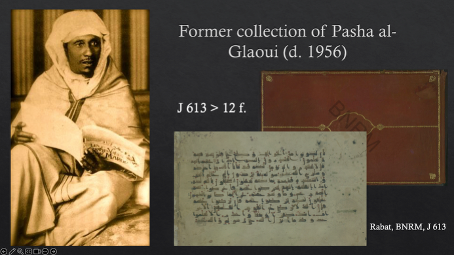
A group of leaves once belonged to the collection of the powerful Moroccan figure al-Tahāmī al-Glaoui, the pasha of Marrakech in the early twentieth century. They are now kept in the National Library of Morocco in Rabat.
And then there are the leaves that have appeared on the international art market. Since the late 1990s, several fragments have surfaced in auctions in London and elsewhere. Some were sold by Christie’s, Bonhams, or Roseberys before disappearing again into private collections.
Piece by piece, these scattered leaves allow us to reconstruct what was once a substantial Qur’anic manuscript. But the pages themselves also contain clues about where the book was made.
Clues in the Parchment
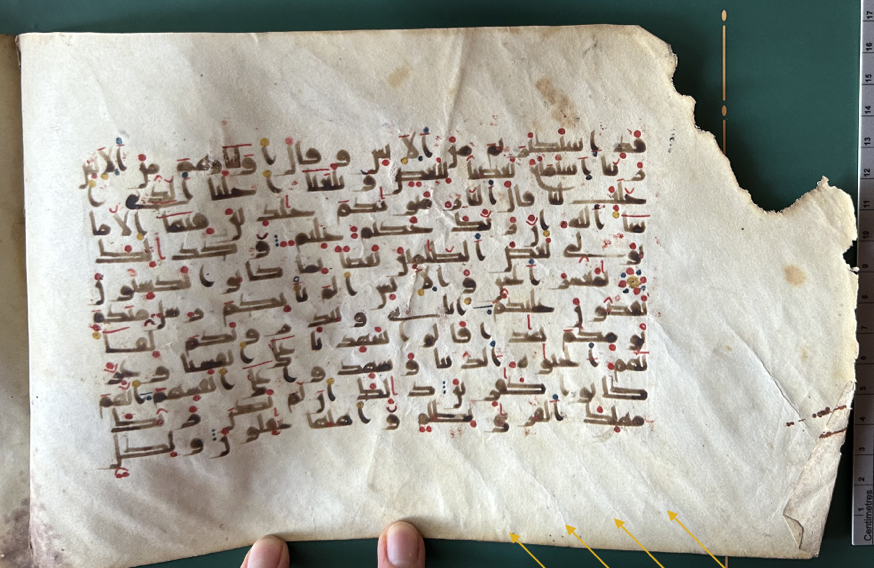
The manuscript is written on parchment of remarkably high quality. The pages are relatively large and arranged in an oblong format typical of early Qur’anic codices. Looking closely at the surface of the parchment reveals faint diagonal striations on the hair side of the skin. These marks probably come from the scraping process used during parchment preparation. Interestingly, similar traces appear in manuscripts associated with North Africa and al-Andalus, and even in medieval Spanish manuscripts written in Visigothic script. The parchment itself may therefore point toward a western Mediterranean context.
Its structure reinforces this impression. The surviving fragments show that the book was made from folded sheets gathered in small units of four bifolia. Within these gatherings, the pages follow what codicologists call the Gregory’s rule, meaning that similar sides of the parchment face each other when the book is opened. This pattern differs from what we typically find in early Qur’anic manuscripts produced in the eastern Islamic world. Instead, it resembles practices known from manuscripts copied in al-Andalus, where Islamic and Latin book cultures coexisted.
A Transitional Calligraphy
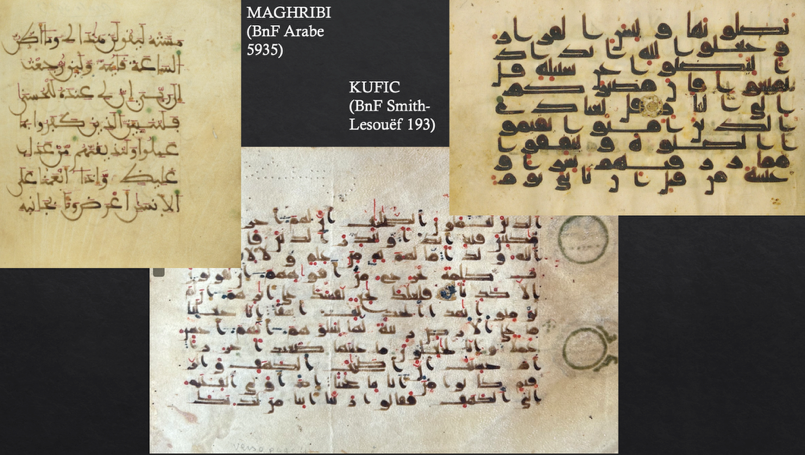
The script belongs to the family of Kufic scripts, the early angular writing styles used in Qur’anic manuscripts.
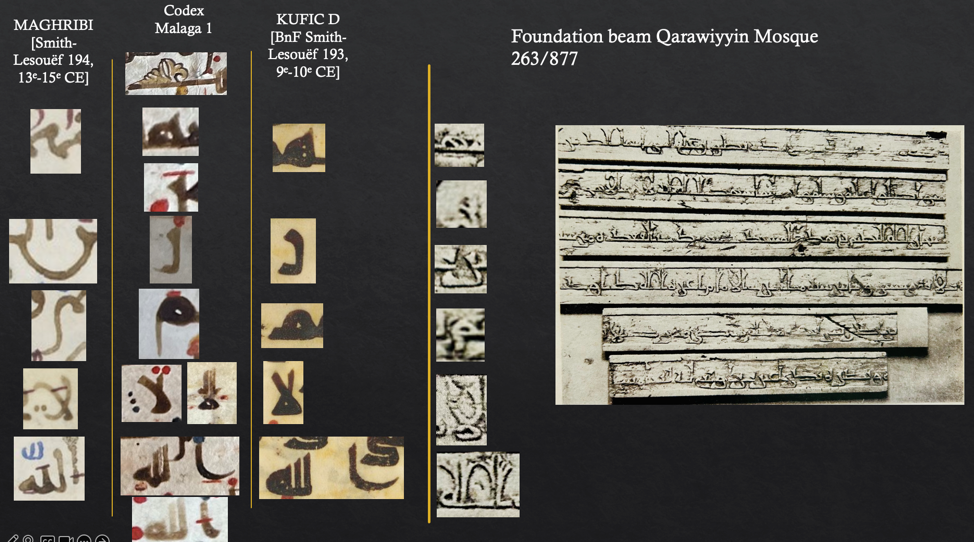
Yet the calligraphy of this manuscript reveals a moment of transition. Some letter forms preserve very ancient conventions inherited from classical Kufic writing. Others anticipate the later Maghribi script, the distinctive rounded style that would eventually dominate the western Islamic world.
Scholars sometimes describe this hybrid stage as “Kufic-Maghribi.” It reflects a period when the prestige of classical Kufic still endured, even as regional styles were beginning to emerge.Interestingly, similar letter forms appear not only in manuscripts but also in inscriptions on buildings, and coins produced in al-Andalus and North Africa between the ninth and twelfth centuries.
A Qur’an manuscript for Scholars ?
Beyond its calligraphy, the manuscript reveals an intense scholarly engagement with the Qur’anic text.
Textual Division
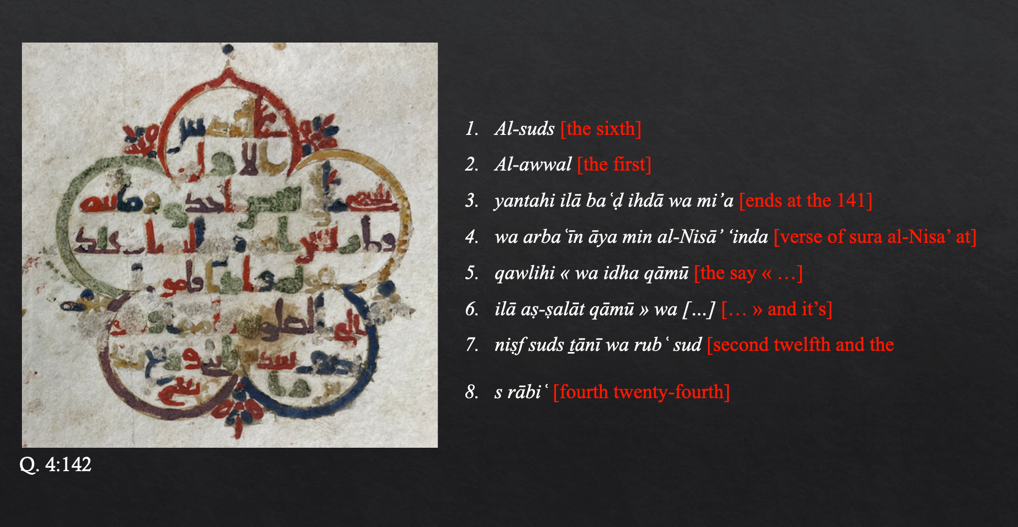
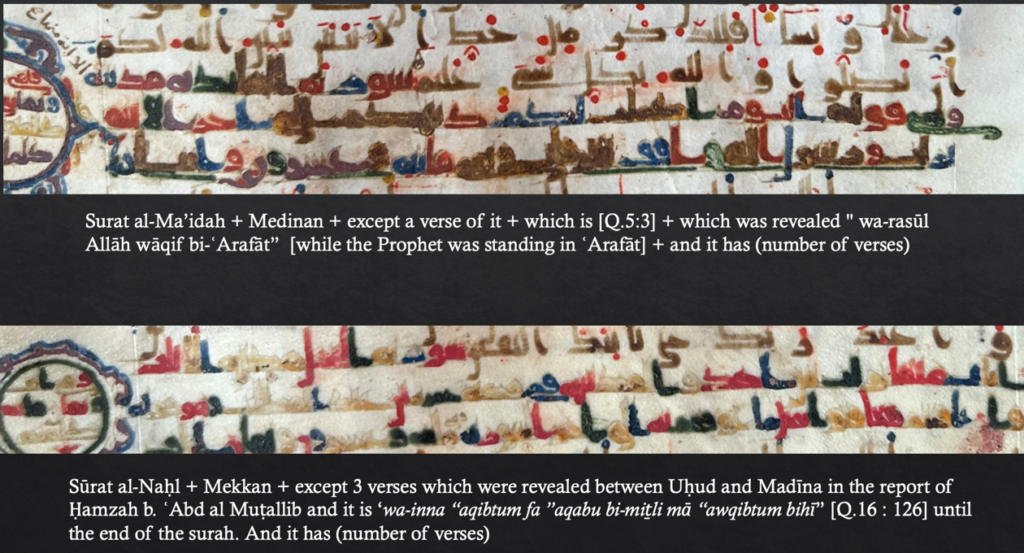
Several chapter titles contain detailed information about the circumstances of revelation of particular verses. Others specify the number of verses and words in a chapter—features associated with the scholarly discipline of Qur’anic verse counting.
The manuscript also includes an unusually complex system of textual divisions. Marginal markers indicate not only verses and groups of five or ten verses, but also larger structural divisions of the Qur’an. Such features suggest that the manuscript was designed for serious study, perhaps by a learned scholar or within a scholarly circle in al-Andalus.
A word on the qirā’āt
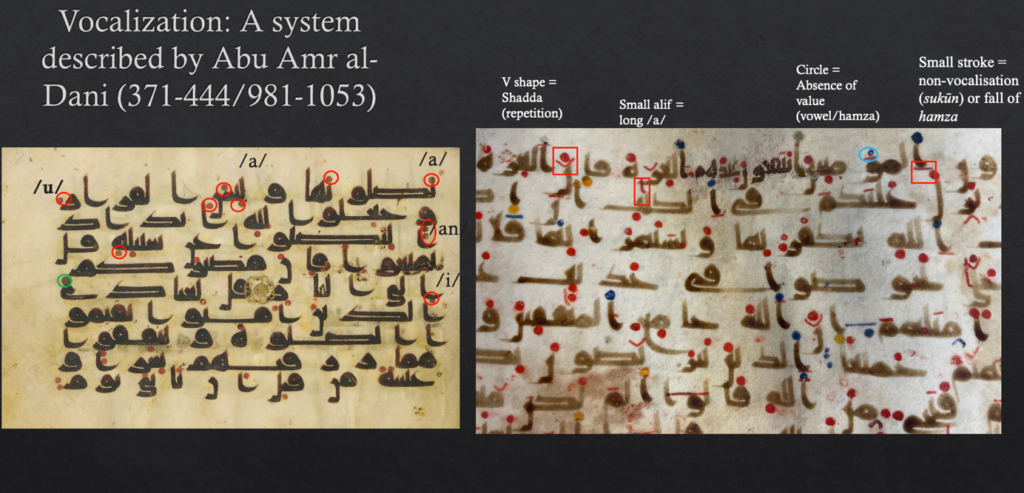
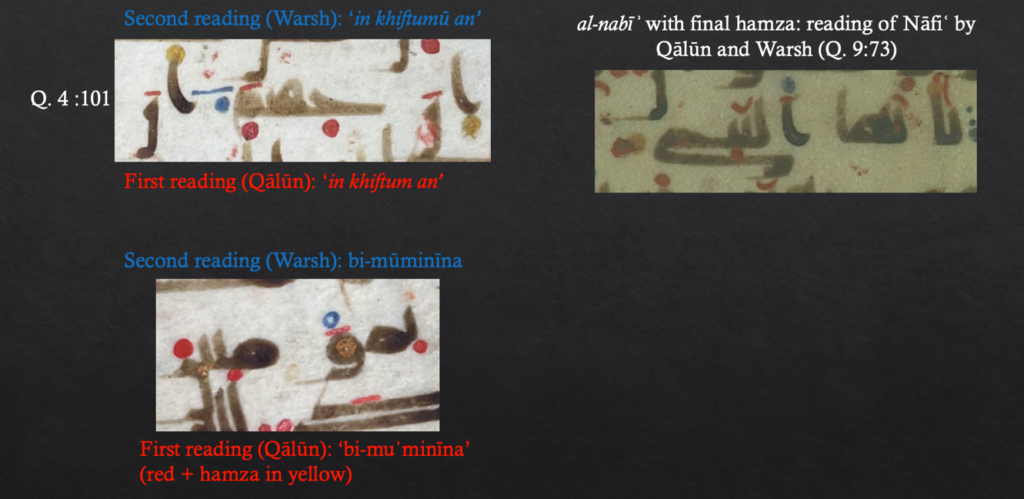
The Codex Malaga 1 also exemplifies a specifically Andalusi system of vocalisation described by the scholar Abū ʿAmr al-Dānī, a major authority on Qur’anic orthography and recitation who lived in al-Andalus during the same period (371–444/981–1053). Its pages display a rich array of diacritical signs rendered in multiple colours, a feature that constitutes a significant indicator for the localisation of the manuscript. These conventions correspond closely to those documented by al-Dānī himself.
Not only do the forms and colours of the signs align with al-Dānī’s descriptions, but the recitational tradition reflected in the manuscript likewise accords with contemporary western Islamic practice. The codex transmits the reading (qirāʾa) of Nāfiʿ of Medina through its two canonical transmissions (riwāyāt): that of Qālūn, marked in red, and that of Warsh, marked in blue.
From Scholar’s Book to Mosque Endowment
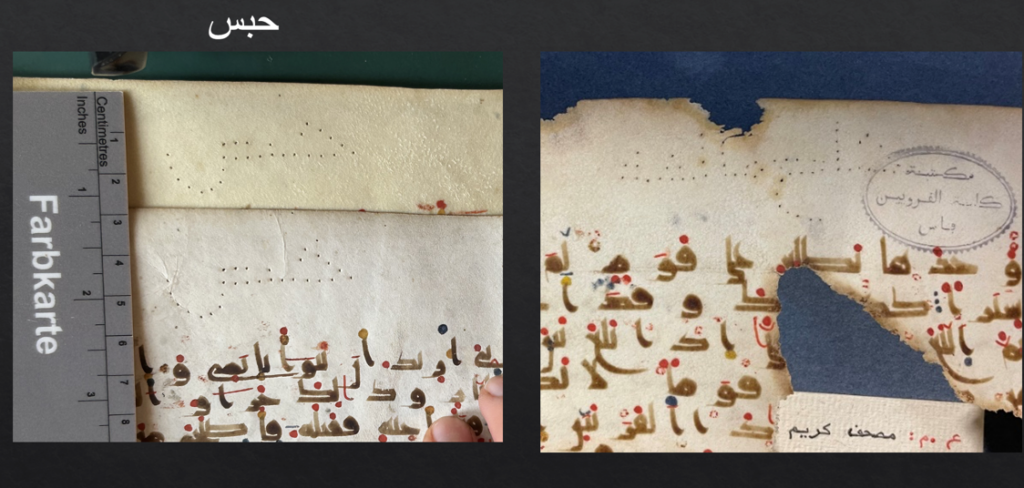
At some point in its history, the manuscript acquired a new institutional function. On several leaves, tiny holes have been deliberately pierced into the parchment with a needle (bi-l ibrā’). Significantly, these perforations occur only on the final leaves of each quire (that is, each folded gathering of pages). Arranged with great care, the holes spell out short Arabic inscriptions such as ḥabs (“pious endowment”) and even the phrase “Great Mosque of Málaga.”
Through this discreet yet permanent intervention, the manuscript was physically marked as a pious endowment (waqf/habs) belonging to the mosque. The precise date of this donation cannot be established with certainty. However, the Great Mosque of Málaga was converted into a church in 1487 following the Christian conquest of the city; the endowment must therefore predate that event.
One of the earliest material evidence to a four-volume mushaf
These minute perforations also provide valuable evidence regarding the manuscript’s physical form at the time of its endowment.
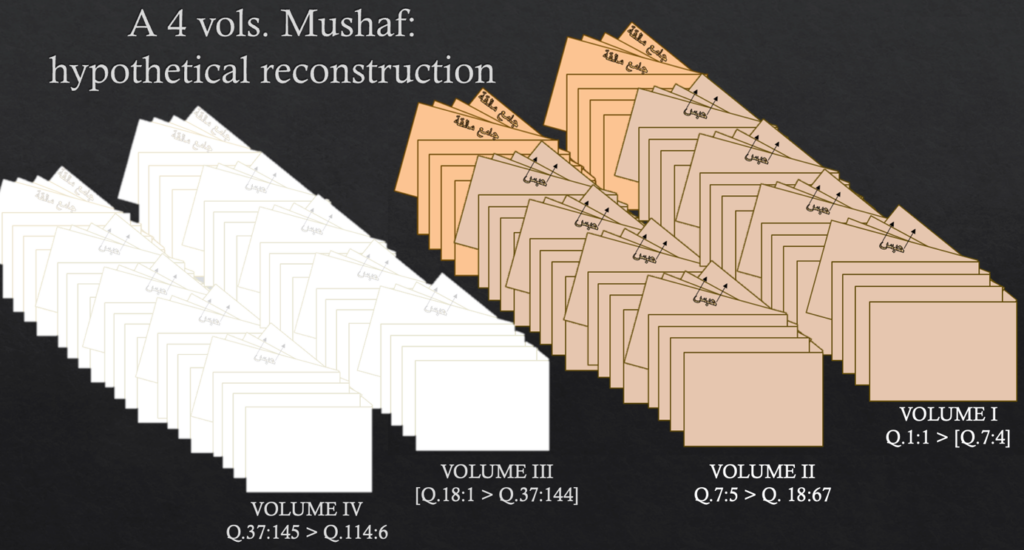
As we said before, the Codex Malaga survives only as a fragmentary assemblage of dispersed leaves and quires; its original binding has not survived, and its initial presentation remains unknown. But careful examination of these small material details strongly suggests that the manuscript once formed part of a Qur’an divided into four separate volumes, a format attested in later Andalusi production.
A first line of evidence concerns textual preservation. The extant folios contain only the first half of the Qur’an and terminate with what was likely a full-page decorative composition marking the end of a volume. Although the decoration itself has disappeared, faint ruling lines made with a dry point remain visible on the previous and final surviving page. Notably, this point corresponds to approximately the midpoint of the Qur’anic text—within Sūrat al-Kahf—indicating that the surviving portion may represent one part, perhaps the second, of a larger multi-volume set.
A second line of evidence derives from the perforated inscriptions themselves. Most quires bear the word ḥabs ; while two gatherings instead display the phrase jāmiʿ Mālaqa (“Great Mosque of Málaga”). These exceptional markings coincide with the ends of the first and second quarters of the Qur’an, suggesting that they were applied at the end of two distinct volumes.
Taken together, this evidence strongly suggests that the Codex was originally divided into four volumes (a rabʿa). If so, it would likely represent the earliest known example of the Mushaf being divided in four volumes in the western Islamic world.
Conclusion
In conclusion, this study has presented a scribal tradition of the Qur’an that does not in itself reveal new information about the text. Treatises already exist concerning the places and circumstances of revelation and the systems of textual division. What this manuscript offers, however, is a rare material witness to how such scholarly knowledge—compiled in the fourth/tenth or fifth/eleventh century in al-Andalus—was actually assimilated and put into practice in Qur’anic copies.
Through it, we gain insight into how the Qur’an was read in the Great Mosque of Málaga at that time, according to the recitation of Nāfiʿ transmitted through Qālūn and Warsh. Unless additional portions of the manuscript are discovered in the future, the identities of its patron and calligrapher will likely remain unknown. Yet one cannot help imagining the context of its production. The patron was almost certainly a prominent Andalusi scholar—perhaps even al-Dānī himself. As for the scribe, one might recall reports of women in Córdoba who copied the Qur’an in Kufic script. Such suggestions remain speculative, of course, but they underscore the human world behind the manuscript.
If nothing else, Codex Malaga 1 is no longer an anonymous artifact. Its distinctive features now allow it to be situated within the intellectual and devotional landscape of medieval al-Andalus, and they may well enable the identification of other Qur’anic manuscripts produced in the region.
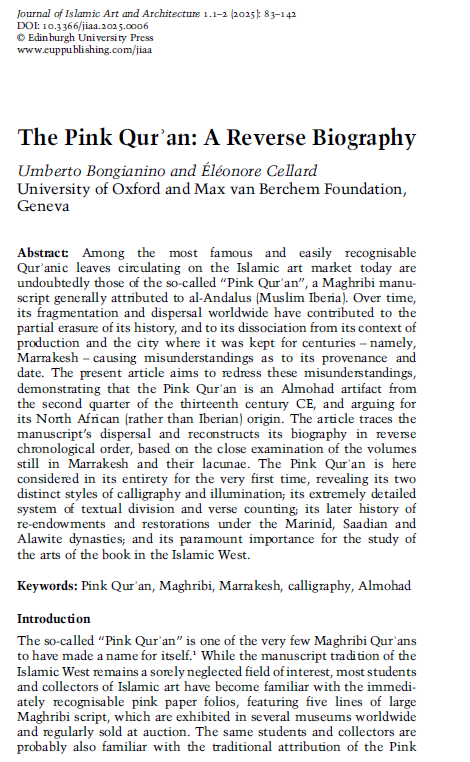
I am delighted to announce the publication of an article I co-authored with Umberto Bongianino, titled “The Pink Qurʾan: A Reverse Biography”, in the Journal of Islamic Art and Architecture: 🔗 https://www.euppublishing.com/doi/abs/10.3366/jiaa.2025.0006
Unfortunately, the paper is not open-access, but I would be happy to share a copy upon request.
I’m thrilled to announce the publication of my first article on Moroccan Qur’an manuscripts in the Journal of Islamic Manuscripts 16(2), 191-240. 📄 Title: À propos d’un ancien manuscrit du Coran en écriture coufique, donné à la Grande Mosquée de Malaga (On an Early Qur’anic Manuscript in Kūfī Script Given to the Great Mosque of Malaga) 🔗 Read the article here
Abstract: This paper examines the oldest Qur’anic manuscript endowed to the Great Mosque of Malaga in al-Andalus. Its leaves—some of which bear the Arabic words “endowed” (waqf) or “endowment” and “Great Mosque of Malaga” perforated in their margins—are now dispersed across Moroccan collections and occasionally appear on the art market. By reassembling its scattered folios, the study highlights the distinctive features of this copy, likely produced in al-Andalus in the 4th/10th or 5th/11th century for a prominent scholar.
Feel free to reach out if you’d like to learn more about this research!
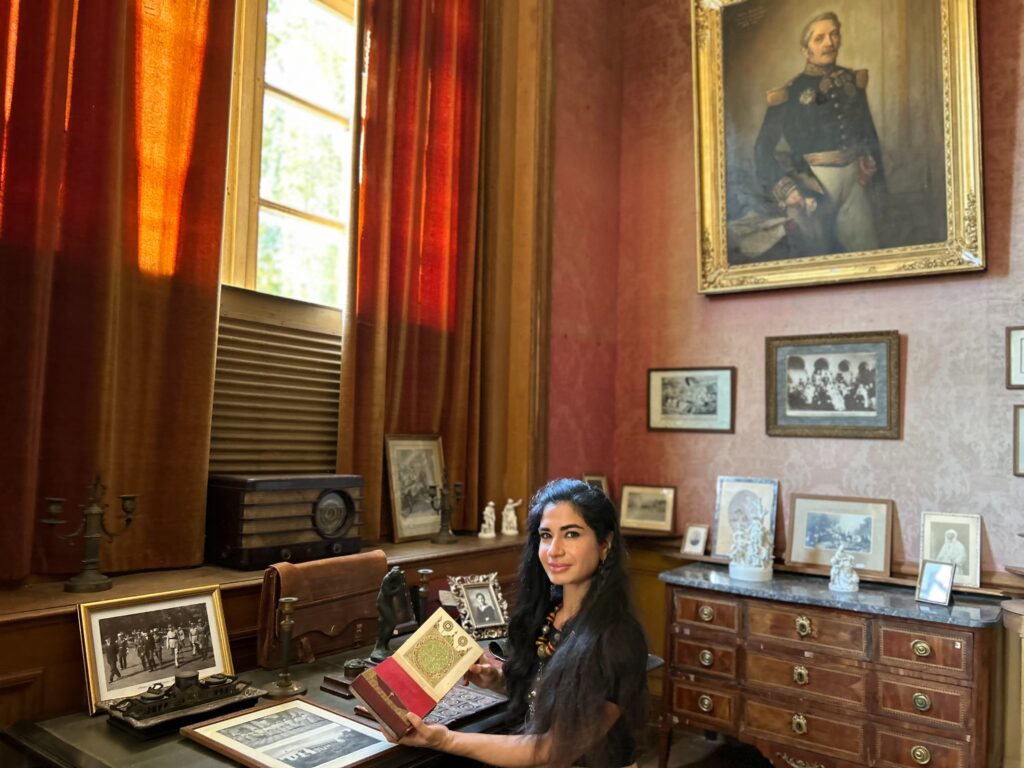
This past July 5 and 6, I had the great honor of visiting Marshal Lyautey’s château in Lorraine. Resident-General of France in Morocco (1912–1925), Lyautey was not only a statesman, but also a passionate admirer of Moroccan art and culture. His château houses an extraordinary collection of Moroccan artifacts, books, and personal objects — a rare and powerful testimony to a century-old relationship between France and Morocco.
This unique heritage is now in the care of the Fondation Lyautey, a small group of passionate volunteers working to preserve both the château and its remarkable collections.But this legacy is fragile — and needs greater visibility and support.
If you believe in the importance of protecting cultural heritage and honoring shared history, I invite you to discover and support the work of the Fondation Lyautey: https://lyautey.fr/fondation/
The Odyssey of the oldest Qur’an in the Royal Library of Morocco with Dr. Éléonore Cellard explores the history of Morocco’s oldest preserved Qur’anic manuscript—a rare, single-volume codex written in Kufic script and dating back to the 2nd AH / 8th century CE. Likely of Eastern origin and sometimes attributed to Caliph ‘Uthman ibn ‘Affan, the manuscript travelled westward over the centuries before finding its place in the Royal Library.
Remarkably intact until the late 20th century, it later suffered extensive fragmentation, leading to the disappearance of numerous folios—many of which have since surfaced on the art market. Using archival photographs and direct examination, Dr Cellard retraces the manuscript’s journey and highlights the challenges of preserving ancient Islamic heritage.
Monday, April 28 · 5 – 7pm
Aga Khan Centre, 10 Handyside Street London N1C 4DN United Kingdom
The AKU-ISMC, in collaboration with the Academy of Science (Portugal), presents Manuscripts for Research: An Advanced Course in Arabic Manuscript Studies, a four-day hands-on advanced training course led by Professor Walid Ghali, Dr. Éléonore Cellard, and Dr. Juan Acevedo.
I’m excited to announce the release of my new article, which delves into early Qurʾānic manuscripts featuring a fully developed diacritical system. The article explores a key manuscript, its production context, and its distinctive diacritical features. Published in Déroche, François, eds. The Qurʾan and Its Handwritten Transmission, (Leiden, The Netherlands: Brill, 09 Dec. 2024)
I’m thrilled to announce that I’ve been awarded a grant from the Max van Berchem Foundation in Geneva. Thanks to this grant, I’ll be able to pursue my research on early Qur’an manuscripts, written in Kufic script, in Moroccan Libraries. A huge thank you to the Max van Berchem Foundation for its support and trust!